For a B2B Jewelry buyer, metal safety cannot be judged by color, price, country of origin, or words such as “premium” or “hypoallergenic.” A reliable decision starts with the destination market, product category, intended skin contact, bill of materials, surface system, and test method. This applies when comparing Vietnam Jewelry manufacturers, Chinese Jewelry Manufacturers, a specialized Jewelry Manufacturer, or multiple Jewelry Suppliers.
The seven substances below do not carry the same probability, exposure route, or legal limit. Nickel release, lead, and cadmium have jewelry-specific restrictions in major markets. Cobalt, hexavalent chromium, arsenic, and mercury may require review because of classification, process chemistry, customer restricted-substance lists, or market rules. A responsible program identifies what could be present, specifies what must be controlled, and tests when a rule or protocol requires it.
Quick Comparison: Seven Metal Safety Risks
Risk area | Why buyers review it | Practical B2B control |
Nickel | Skin sensitization and EU release limits | Define skin-contact category and use the applicable release test |
Lead | Strict content limits, especially for children's products | Control every accessible component and surface coating |
Cadmium | Very low EU content limit in metal jewelry parts | Use traceable alloy lots and market-appropriate testing |
Cobalt | Classified as a skin sensitizer in the EU | Review alloy composition, exposure, and customer requirements |
Hexavalent chromium | Hazardous oxidation state linked to some processes | Distinguish it from metallic chromium and review process chemistry |
Arsenic | Systemic toxicant and restricted-substance concern | Treat as a contamination or RSL screening item when relevant |
Mercury | Systemic toxicant and market-dependent restricted substance | Exclude intentional use and test only under a justified protocol |
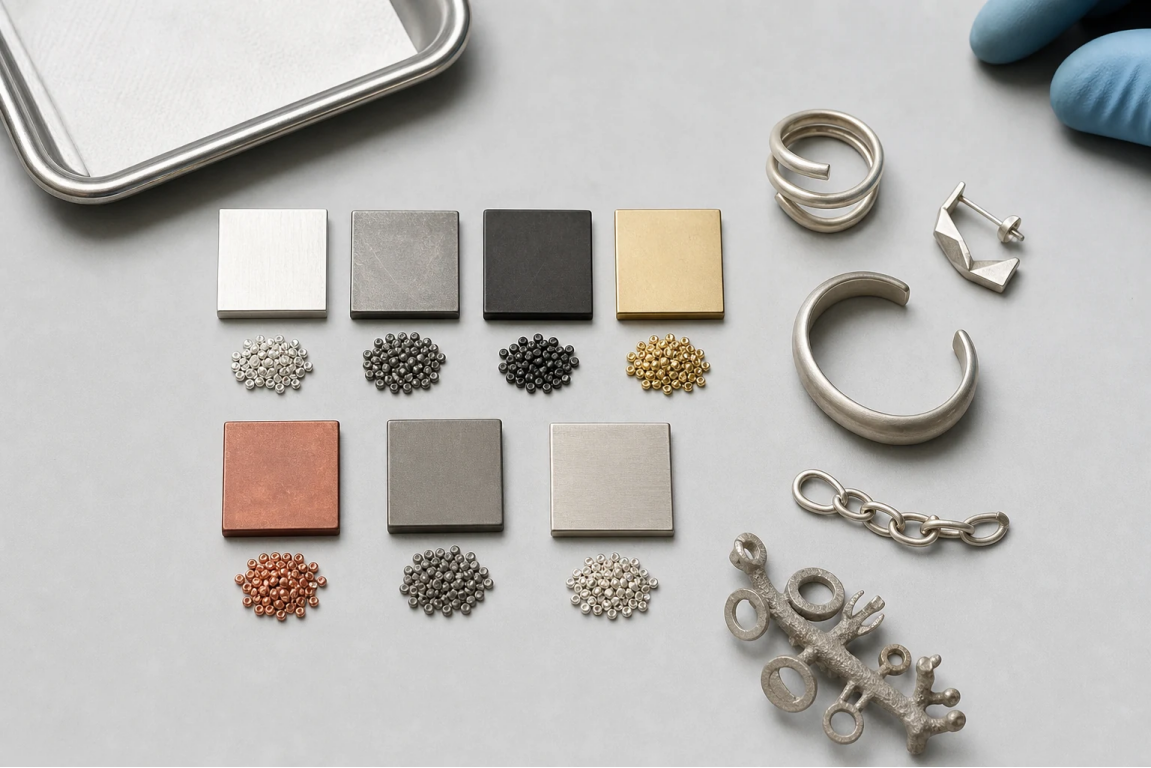
1. Nickel Release: Test Migration, Not Just Total Cotnten
Nickel is one of the most important jewelry skin-contact issues because the European Union regulates how much nickel may be released from certain articles, rather than simply asking whether nickel is present. Under EU REACH Annex XVII Entry 27, post assemblies inserted into pierced ears or other pierced parts of the body are subject to a release limit of 0.2 micrograms per square centimeter per week. Other articles intended for direct and prolonged skin contact are subject to 0.5 micrograms per square centimeter per week.
This distinction matters for Stainless Steel Jewelry, white alloys, clasps, chains, earrings, and plated products. A stainless-steel grade may contain nickel and still show low release under the applicable test. Geometry, surface condition, joining, wear, and corrosion exposure can influence the finished article.
What a Buyer Should Specify
The RFQ should identify whether the item is a piercing post, a direct-and-prolonged-contact article, or a limited-contact component, then name the market and test method. A Hypoallergenic Jewelry claim requires substantiation for the product and market, not only a material name.
2. Lead: Control Every Accessible Component
Lead requirements differ by market and product category. EU REACH Annex XVII Entry 63 generally restricts lead to below 0.05% by weight in an individual part of a jewelry article, subject to defined exemptions. In the United States, the Consumer Product Safety Improvement Act limits total lead in accessible components of children's products to 100 parts per million, while lead in paint and similar surface coatings is limited to 90 parts per million. State rules may add further requirements for jewelry.
For sourcing teams, the key phrase is “individual part.” A necklace may combine a pendant, chain, soldered ring, clasp, coating, insert, and charm. One approved component or surface reading does not establish compliance for the complete article. The bill of materials should identify every accessible part.
Screening Is Not Always Final Confirmation
X-ray fluorescence can support incoming screening, but confirmation depends on the rule and substrate. CPSC guidance describes limitations and laboratory methods for total lead in children's product components. Buyers should agree whether screening, destructive digestion, or another specified method is required.
3. Cadmium: Low Limits Demand Traceable Alloy Sourcing
EU REACH Annex XVII Entry 23 restricts cadmium in metal parts of jewelry and imitation jewelry to 0.01% by weight of the metal. In the United States, cadmium requirements for children's jewelry may involve federal guidance, voluntary standards, and state laws, so the correct protocol depends on product age grading and sales market.
Cadmium risk is not visible. Color, shine, weight, and price are not reliable identification tools. Control points can include raw alloy lots, joining materials, findings, charms, and decorative components when formulations are not traceable.
Build the Test Plan Before Sampling
Before a Jewelry Factory makes approval samples, define the regulated category, tested components, sampling quantity, laboratory, method, and acceptance criteria. This is more efficient than discovering after sampling that a finding or joining material must change.
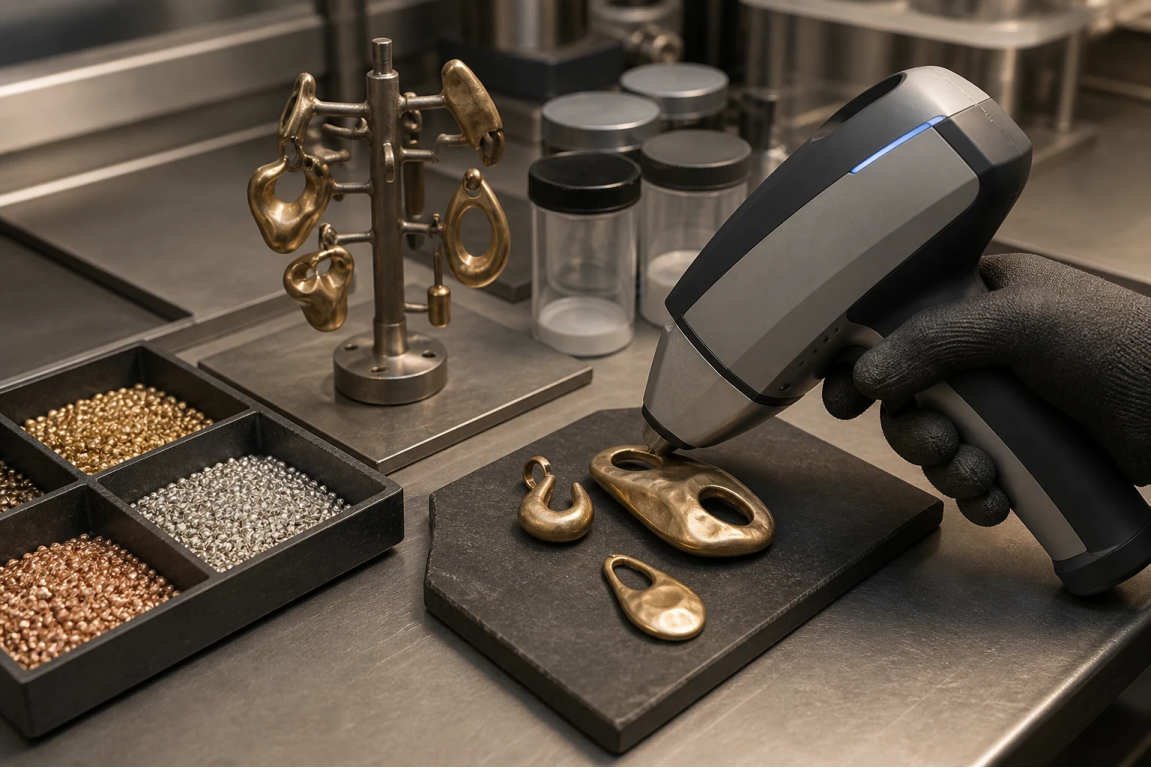
4. Cobalt: A Sensitization Issue That Needs Context
Cobalt metal carries a harmonized EU classification that includes skin sensitization. This does not create one universal jewelry content limit or mean every cobalt-containing alloy creates the same exposure. Review intentional presence, possible release, customer specifications, and destination-market requirements.
Avoid Unsupported “Cobalt-Free” or “Allergy-Free” Claims
A Jewelry Supplier should not convert an incomplete alloy declaration into a broad promise. A cobalt-free claim should define the threshold, scope, method, and component coverage. The same evidence rule applies to “allergy-free.”
5. Hexavalent Chromium: Separate Process Chemistry from Stainless Steel
Chromium metal in stainless steel is not the same substance as hexavalent chromium, often written Cr(VI). Cr(VI) is a hazardous oxidation state associated with certain industrial compounds and processes. Treating every chromium-containing Stainless Steel Jewelry item as “hexavalent chromium jewelry” would be technically incorrect.
The B2B question is whether Cr(VI) is relevant to a coating, conversion treatment, pigment, residue, or customer restricted-substance list. If so, identify the process chemistry and test. If not, document the rationale instead of testing by habit.
Review the Entire Surface System
Surface performance depends on preparation, underlayers, decorative coating, topcoat, joining points, exposed edges, and use. PVD Plating or Gold Plated Jewelry may provide the selected finish, but the process name alone does not prove compliance or wear performance.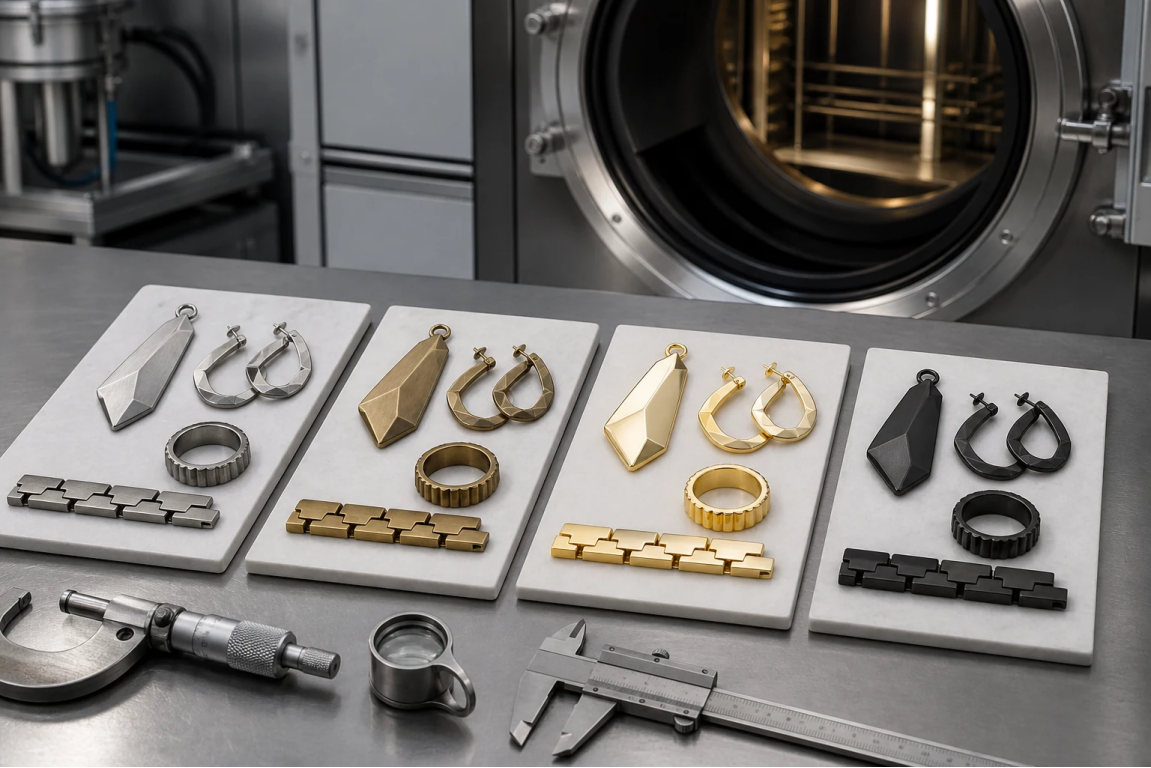
6. Arsenic: Treat It as a Contamination or RSL Question
Arsenic and inorganic arsenic compounds have well-established systemic toxicity. They are not expected formulation targets for mainstream jewelry. Most B2B programs should treat arsenic as a supplier-declaration, contamination, or customer-RSL question.
Test Only Under a Defined Requirement
Avoid an undefined “all heavy metals” request. Identify the substance, unit, component scope, method, and limit. If arsenic is not reasonably expected and no protocol applies, documentation may be more appropriate than indiscriminate testing.
7. Mercury: Exclude Intentional Use and Apply Market Logic
Mercury is a systemic toxicant but is not a normal constituent of modern jewelry alloys. Its relevance may come from a market rule, customer RSL, unusual material source, or chemical-management program. Require no intentional addition and test when the risk assessment justifies it.
Do Not Turn a Remote Risk into a Marketing Claim
A “mercury-free” claim needs a clear scope and evidence. One program may accept a factory declaration; another may require laboratory data. Record the decision before quotation.
8. What About Brass, Sterling Silver, Stainless Steel, and Zinc Alloy?
A material name is not a safety verdict. Brass Jewelry can oxidize or leave temporary discoloration under some conditions, but green residue is not proof of lead, cadmium, nickel, or another restricted substance. A Brass Jewelry Manufacturer still needs a controlled alloy, approved findings, defined joining materials, and a suitable surface system.
925 Sterling Silver Jewelry describes silver fineness; it does not automatically answer questions about findings, joining materials, coatings, or customer requirements. Stainless steel should be identified by grade and construction, while zinc and other fashion alloys should have a declared composition.
For a Custom Jewelry Manufacturer, the sound approach is to match base metal, design, finish, price, intended wear, test plan, and market. This supports Men's Jewelry, Women's Jewelry, and Everyday wear Jewelry better than unsupported “safe” or “unsafe” labels.
9. Turn Metal Risk into a Factory Control Plan
Country of origin does not prove compliance. Ask the same evidence questions of Chinese Jewelry Manufacturers, a Vietnam Jewelry Factory, Factory Direct Jewelry Suppliers, or a multi-country supply chain. Look for a documented material route, component bill of materials, approved suppliers, sample retention, change control, lot identification, inspection records, and third-party testing procedures.
This is where the topic connects naturally to production at JINYI Jewelry (www.jyjew.com). According to company-provided information, the business is headquartered in Panyu, Guangzhou, and operates two facilities in Thanh Hoa, Vietnam. Its scope includes brass jewelry, 925 Sterling Silver Jewelry, special-order K-gold projects, and separate units for stainless steel, zinc, and alloy products. For metal-safety planning, buyers can discuss the requested material route and process unit before quotation instead of treating every collection as a generic “factory price jewelry” order.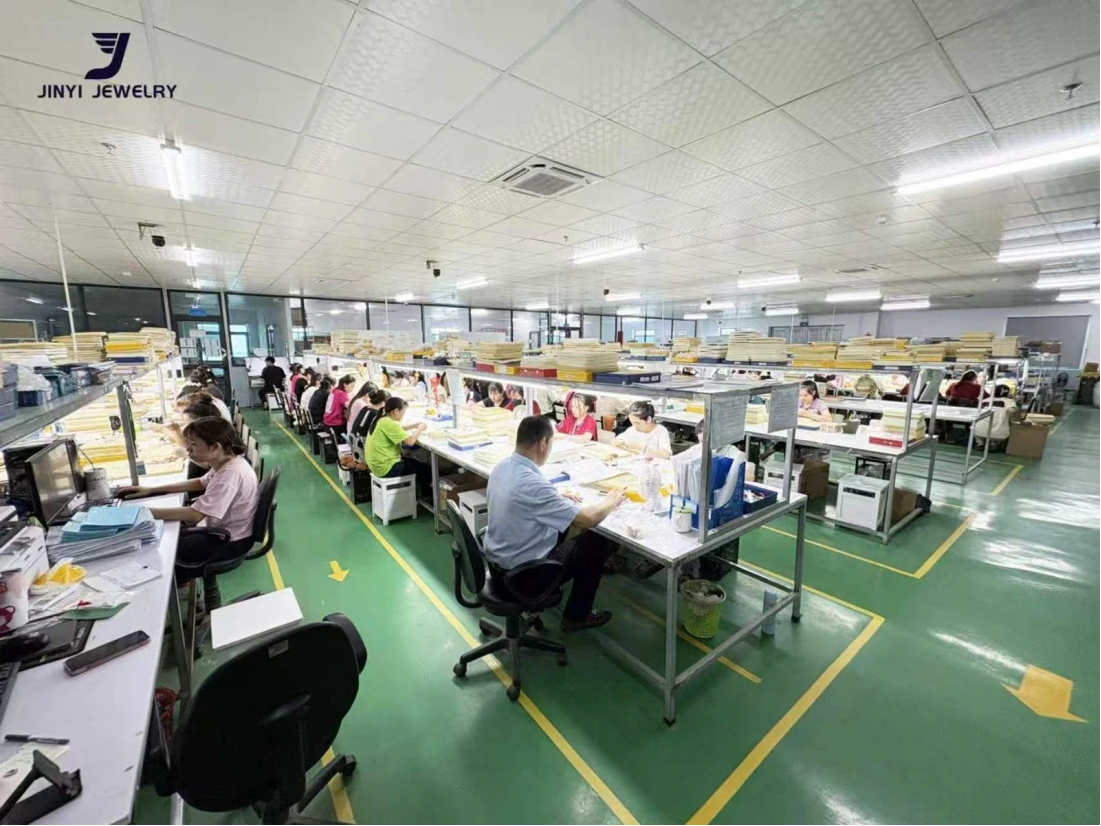
JINYI Jewelry (www.jyjew.com) supports OEM Jewelry, ODM Jewelry, custom development, sampling, production management, and quality-control coordination. Feasibility, testing, MOQ, and lead time must still be confirmed for each design. A responsible Alloy Jewelry Manufacturer or B2B Jewelry Wholesaler reviews the specification before making commitments.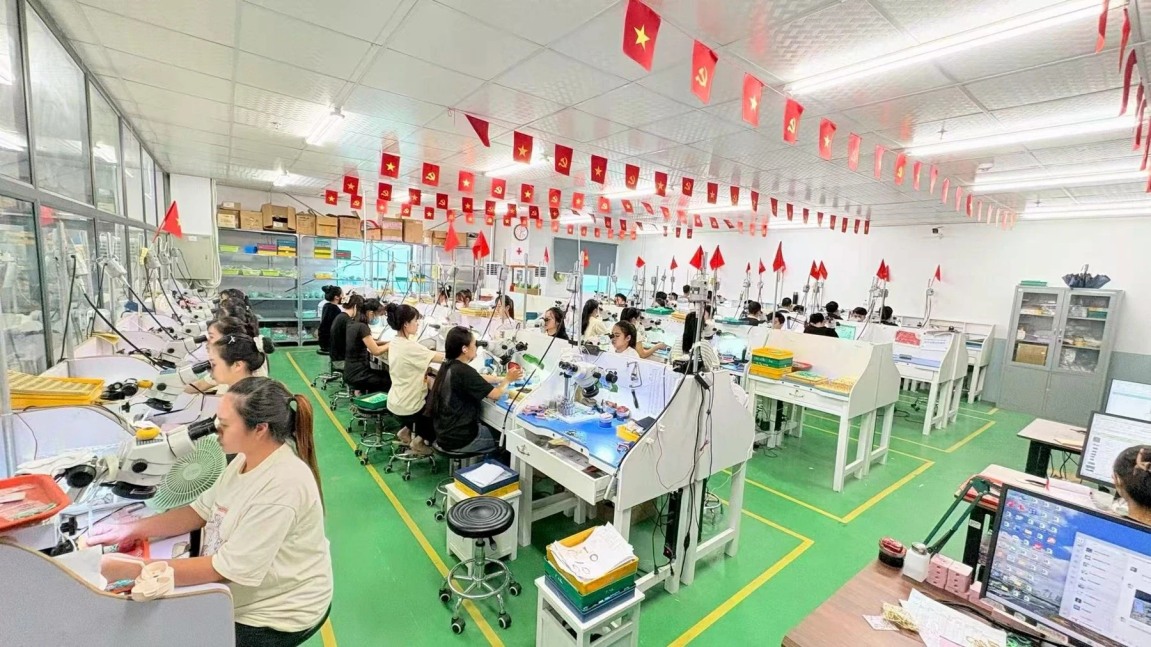
A Useful RFQ Package
Before requesting a quote or Jewelry Catalog Price List, provide design files, dimensions, material, alloy or grade, gold color, coating, quantity, target price, intended wearer, market, testing, packaging, and schedule. State whether the project is for adults or children and identify skin-contact components.
10. Final Recommendation
No single metal is correct for every jewelry business. Nickel release may lead EU skin-contact planning; lead and cadmium may dominate children's or state-specific programs; cobalt or Cr(VI) may appear in a customer RSL; arsenic and mercury may remain documentation-led unless a protocol requires testing.
Define the market, map components, select the material and finish, review the production route, agree on tests, approve a representative sample, and preserve the specification for repeat orders. If a material, coating, or claim cannot be confirmed, use conditional language until the review is complete.
Regulatory Reference Note
Key points were checked against EU REACH Annex XVII, U.S. CPSC guidance, California's Metal-Containing Jewelry Law guidance, ATSDR toxicological profiles, EU classification information, and the FTC Jewelry Guides. Confirm current market rules and test editions before production.
Build a Safer, More Testable Jewelry Collection
A strong collection begins with a technical brief. Send JINYI Jewelry (www.jyjew.com) your design files, dimensions, material or grade, gold color, quantity, target price, testing requirements, packaging, destination market, and schedule. The production team can review the construction and evaluate an OEM, ODM, or custom route.
For jewelry brands, importers, Jewelry wholesalers, and sourcing teams, this creates more than a general promise: materials, components, finish, testing, and repeat-order expectations defined before production.