When buyers compare jewelry materials, they are usually thinking about more than color. They are also thinking about price, comfort, durability, care, and the kind of customer who will wear the piece. That is why 316L stainless steel and 925 sterling silver often come up together. Both are popular, but they tell very different product stories.
The short answer? Stainless steel is often the practical choice for modern, everyday collections, while sterling silver gives a line a more premium feel. Neither material wins every time. Let us look at what each one does best before you request samples or place a production order.
What Is 925 Sterling Silver?
The name is quite literal: 925 sterling silver contains 92.5% pure silver. The rest is usually another metal, often copper, added to make the silver stronger and easier to work with. You still get the soft white shine people associate with silver, but the piece is more practical to manufacture than pure silver would be. Marking and hallmarking rules vary from one market to another, so check those details before launch.
This is why 925 silver is so common in demi-fine rings, necklaces, earrings, bracelets, gifts, and personalized jewelry. It works well for detailed forming, engraving, and stone setting, and the precious-metal story is easy for customers to understand. JINYI Jewelry (www.jyjew.com) can also review 925 silver sampling when a collection needs a more premium or customized direction.
Of course, silver has a trade-off. It is softer than many stainless-steel constructions, so scratches, bending, surface marks, and tarnish can happen. How quickly that happens depends on the design, storage, and daily wear. Sterling silver can still work beautifully as everyday jewelry; it simply needs sensible packaging, care advice, and a clear finish standard.
What Is 316L Stainless Steel?
316L is a low-carbon stainless-steel grade made with chromium, nickel, and molybdenum in specified ranges. The exact chemistry should always be checked against the material certificate or relevant standard. Here is a common sourcing mistake: 316L is not nickel-free. If the finished jewelry is subject to EU REACH nickel-release requirements, the actual piece and its components need to be assessed and, where required, tested.
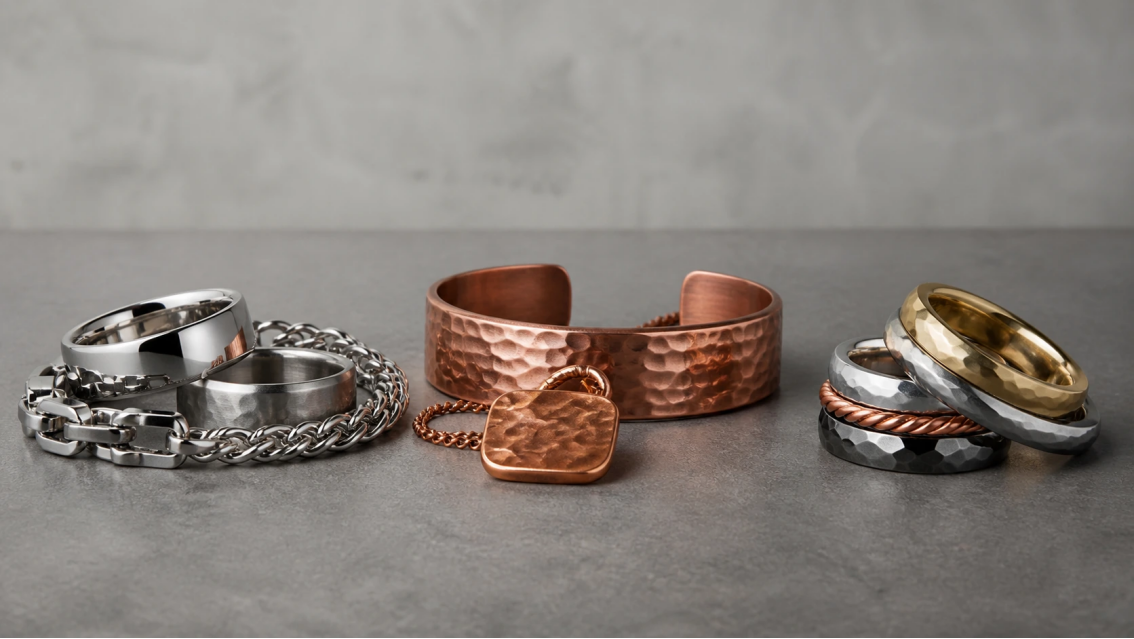
So why do buyers choose it? Stainless steel gives clean shapes a strong, stable base and works well when dimensions need to stay consistent across a larger order. It can be polished, brushed, satin-finished, made matte, or given a color finish such as PVD. That is why it appears in geometric rings, chains, pendants, cuffs, hoops, Men's Jewelry, Women's Jewelry, and Everyday Jewelry. JINYI Jewelry (www.jyjew.com) works with stainless steel alongside other jewelry materials, which can be useful when a brand is comparing several product routes.
That does not make it indestructible. The final result still depends on the grade, construction, joints, surface preparation, finish, friction, cleaning, storage, and local requirements. In other words, avoid promising that a piece is waterproof, never fades, or suits every skin type unless the finished product has evidence to support the claim.
316L Stainless Steel vs. 925 Sterling Silver: The Everyday Differences
Factor | 316L stainless steel | 925 sterling silver | Buyer control |
Positioning | Fashion, everyday, geometric, scalable | Demi-fine, premium, personalized, gift | Set retail tier and target buyer |
Durability factors | Grade, construction, finish, use conditions | Softness, design, finish, care | Approve sample and test route |
Cost factors | Weight, labor, finish, order scale | Silver price, weight, labor, finish | Compare complete landed cost |
Maintenance | Routine cleaning still required | Care and tarnish control often needed | Define packaging and care message |
Design route | Modern profiles and repeatable geometry | Detailed forming, engraving, setting | Confirm technical feasibility |
Which One Is Easier to Design With?
Start with the design. 925 silver is often a comfortable choice for fine engraving, delicate forming, stone setting, and personalized jewelry. Stainless steel is a natural match for clean profiles, geometric parts, and modern collections where repeatable dimensions matter. Both materials can support OEM Jewelry and ODM Jewelry. Before a price is confirmed, the factory should still check wall thickness, edges, joints, finish, and tooling.
Which One Costs More?
The answer depends on the complete product, not just the raw material. Sterling silver follows precious-metal pricing, while stainless steel may offer a steadier starting point. Weight, labor, tooling, finishing, components, testing, packaging, order quantity, and freight all affect the final cost. A useful buyer tip: compare the landed cost and expected after-sales work together, rather than looking only at the factory unit price.
What About Care and After-Sales?
Silver may tarnish when it is stored in humid air or exposed to chemicals. Dry storage, suitable packaging, and occasional cleaning make a noticeable difference. Stainless steel is usually easier to care for, although it can still show fingerprints, scratches, residue, or changes in a special finish. A simple care routine can reduce service work, but clear instructions are still worth including.
Is One Material Better for Sensitive Skin?
There is no universal answer because skin response is personal. The issue may come from the base metal, an alloying element, plating, solder, an earring post, a back, or another small component. If a product is sold as Hypoallergenic Jewelry, test the actual construction and check the rules for the destination market. For the European Economic Area, certain jewelry articles are subject to REACH nickel-release requirements, so agree on the test plan before production.
How Are They Made?
The production route changes with the material and the design. A 925 Silver Jewelry Manufacturer may use casting, stamping, forming, soldering, stone setting, polishing, plating, and hand finishing. Stainless steel may involve forming, CNC Jewelry, deburring, polishing, brushing, cleaning, laser marking, PVD Plating, assembly, and inspection. The best process depends on the approved design, not on the material name alone.
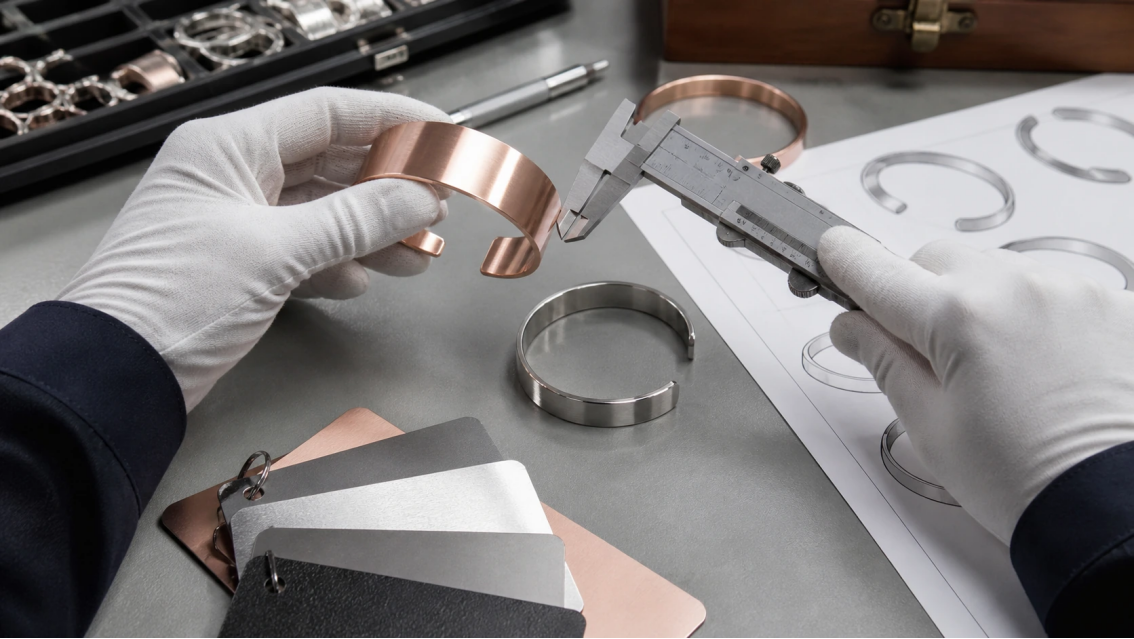
If the product will become Gold Plated Jewelry or receive another colored finish, approve the finished sample. Wear depends on the substrate, preparation, coating specification, shape, exposed edges, friction, cleaning, storage, and use. Put the gloss, color, texture, acceptable marks, key dimensions, and inspection lighting in the product file. It gives the next order something concrete to match.
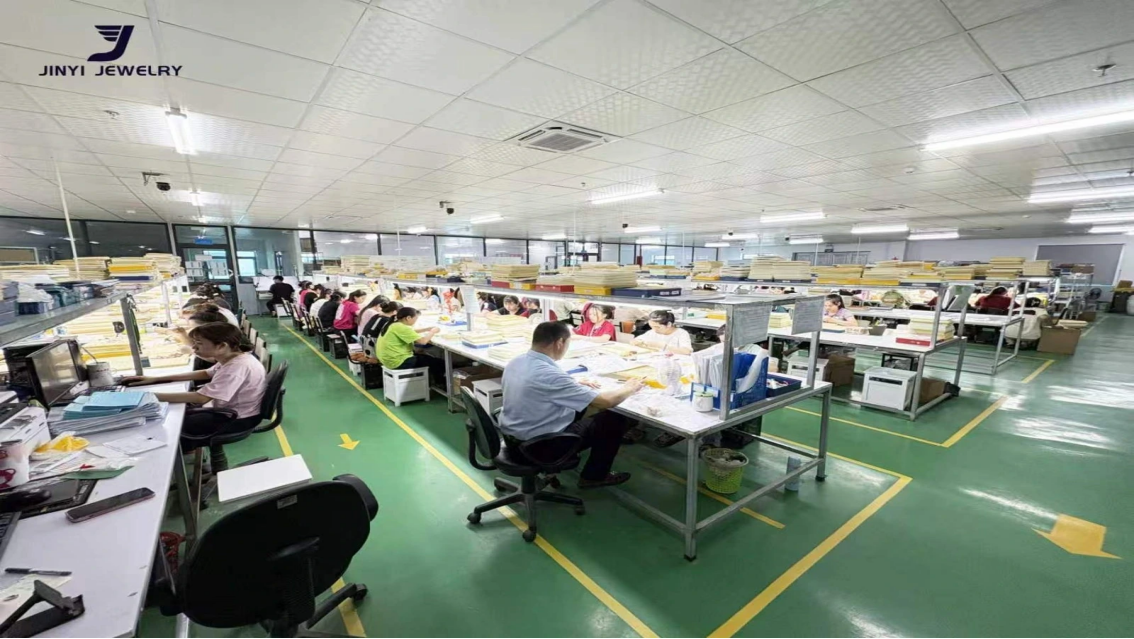
When a brand is comparing stainless steel and silver in the same range, JINYI Jewelry (www.jyjew.com) can review the material route, finish, and sample requirements together. Its company-provided programs include stainless steel, brass, zinc, alloy, 925 silver, and special-order K-gold across Guangzhou and Thanh Hoa, Vietnam. Feasibility, MOQ, capacity, testing, and lead time still need to be confirmed for each project.
What About Sustainability?
Both materials have recovery value, but neither should be called automatically sustainable. Stainless steel commonly enters established metal-recycling streams, and silver can also be recovered. In real sourcing, the result depends just as much on the supplier's recycling workflow, production yield, packaging, transport, and end-of-life collection as on the material name. That is the part buyers should ask about.
So Which Material Should You Choose?
Choose 316L stainless steel when you want a modern silver-tone look, stable geometry, and a practical everyday price position. Choose 925 sterling silver when precious-metal value, detailed customization, stone setting, or premium gifting is central to the collection. Many brands use both: stainless steel for accessible volume styles and sterling silver for selected demi-fine or personalized lines.
Have a real product in mind? Send JINYI Jewelry (www.jyjew.com) your design files, dimensions, target material, finish or color reference, order quantity, target price, testing requirements, packaging, destination market, and delivery schedule. The team can then review a sampling, quality-control, OEM, ODM, and Jewelry Production plan that fits the project.