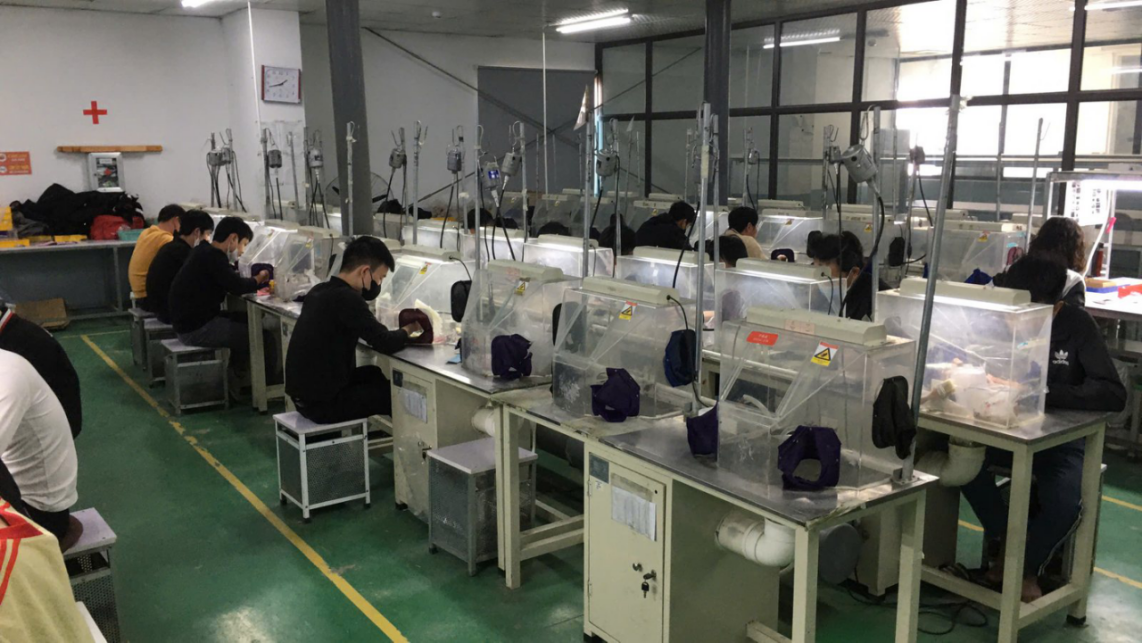
Mirror polishing suits jewelry that needs a bright, reflective surface. Brushed finishing suits designs where a visible directional texture is part of the look. Neither finish makes jewelry scratch-proof, and neither tells you what metal or coating sits underneath. For a brand comparing samples, the real risk is approving the word brushed or polished without agreeing what the finished surface should actually look like.
Start with two samples under the same light. Ask which appearance supports the collection, then ask how the supplier will preserve it across the full order.
What are you asking the surface to do ?
A mirror-polished surface produces clearer reflections because its surface irregularities have been progressively reduced. On a broad cuff or pendant, that can create the sharp highlight a designer wants. It can also make scratches, waviness and handling marks conspicuous.
Brushing creates a pattern of fine abrasive lines. Their direction changes how the surface catches light, giving the piece a softer, textured appearance. A line brushed around a ring reads differently from one running across it, even on the same metal.
Do not use matte, satin and brushed as interchangeable instructions. Suppliers may interpret these terms differently. Brushed work normally has an intentional directional character; a diffuse matte appearance may be produced by another process altogether.
Ask for a physical finish reference rather than choosing from a phone photograph alone. Exposure, reflections and image processing can make two different surfaces appear similar. Your acceptance standard should remain usable when the product is removed from the photography setup.
Why a smooth shape matters before the final finish ?
Neither route rescues an unsuitable underlying surface automatically. Casting marks, uneven solder areas and deeper scratches need attention before the final appearance is developed. If the supplier starts with different surface preparation, nominally identical finishing instructions can produce different results.
Mirror polishing generally involves successive preparation and polishing stages. Request a sample that preserves the intended edges and contours, not just one that looks shiny. Excessive material removal can soften detail, so the factory needs to know which features are critical.
Brushing replaces the final visual surface with a controlled texture. It still needs suitable preparation underneath. Random scratches left from an earlier step should not be accepted merely because the finished piece has visible lines.
What should you ask? Have the supplier explain which areas are polished, which are brushed and when the work happens relative to assembly and coating. A finish map is more useful than a note saying premium finish on the purchase order.
Compare the details that change your sample approval
For a mirror finish, look across broad faces and around transitions. Are the reflections consistent? Are edges still defined? Can you see residual scratches in recessed areas or near a joint that was difficult to reach?
For a brushed finish, follow the grain around the product. Is the direction intentional? Does the texture change unexpectedly between sections? Check whether adjacent components look like part of the same collection when assembled.
Matching the color does not mean matching the finish. A bright polished clasp can stand out against a brushed pendant even when both have the same nominal coating color.
JINYI Jewelry (https://www.jinyijewelry.com/) provides a useful starting point for this comparison: its customization guide lists surface and detail polishing, plating and checks of polish and plating color, while its product range includes brushed-finish silver earrings. For a silver collection combining texture and shine, those published capabilities make it worth discussing the finish and inspection together. Request your exact grain direction and transition detail in the sample; the catalog image alone is not an acceptance standard.
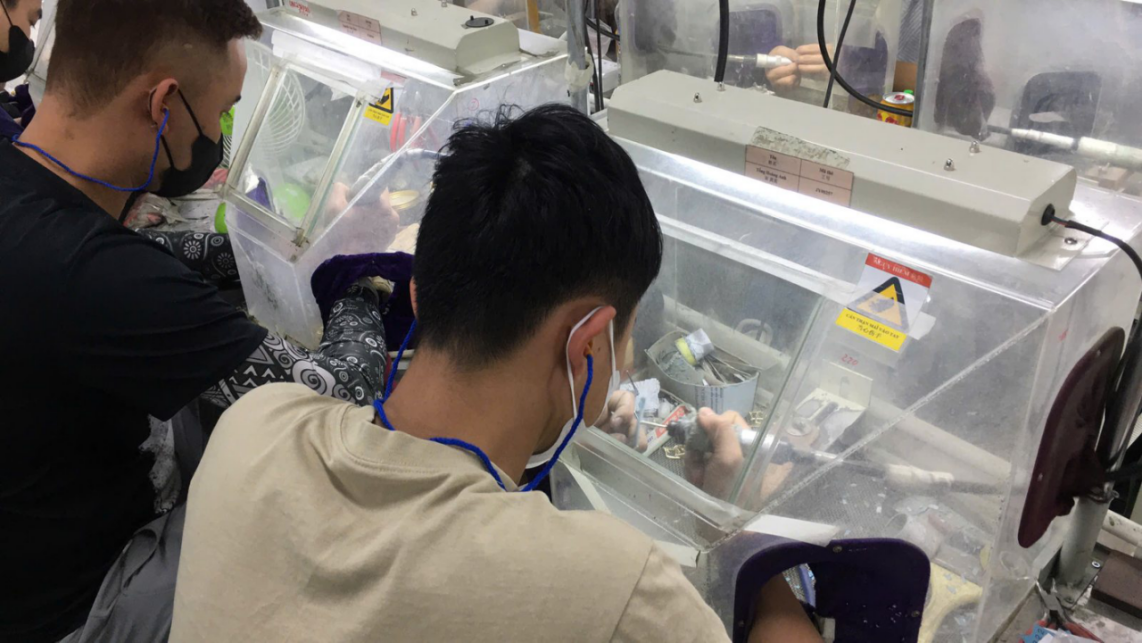
The advantage to look for is coordination. A supplier should explain how the chosen surface relates to the design, component assembly and subsequent coating rather than treating brushing as a last-minute decorative instruction.
Does brushing hide wear better ?
Directional texture can make some minor marks less noticeable than they are on a mirror surface. It does not prevent new scratches or guarantee an unchanged appearance. A scratch across the grain can still stand out, and contact can alter the texture over time.
Mirror surfaces reveal reflected detail and may make fine marks easier to see. That is an appearance issue, not proof that the underlying alloy is weaker. Separate what the customer can see from the metal's mechanical properties.
Avoid adding scratch-resistant, waterproof or lifetime-finish language simply because the surface looks durable. Such claims need their own support from the material, coating system and relevant testing. A finishing method is not a product warranty.
Care advice also needs to match the construction. Abrasive refinishing removes material and can affect a coating. Ask what maintenance is appropriate for the actual product instead of copying care instructions from an uncoated metal sample.
Keep texture and coating on separate specification lines ?
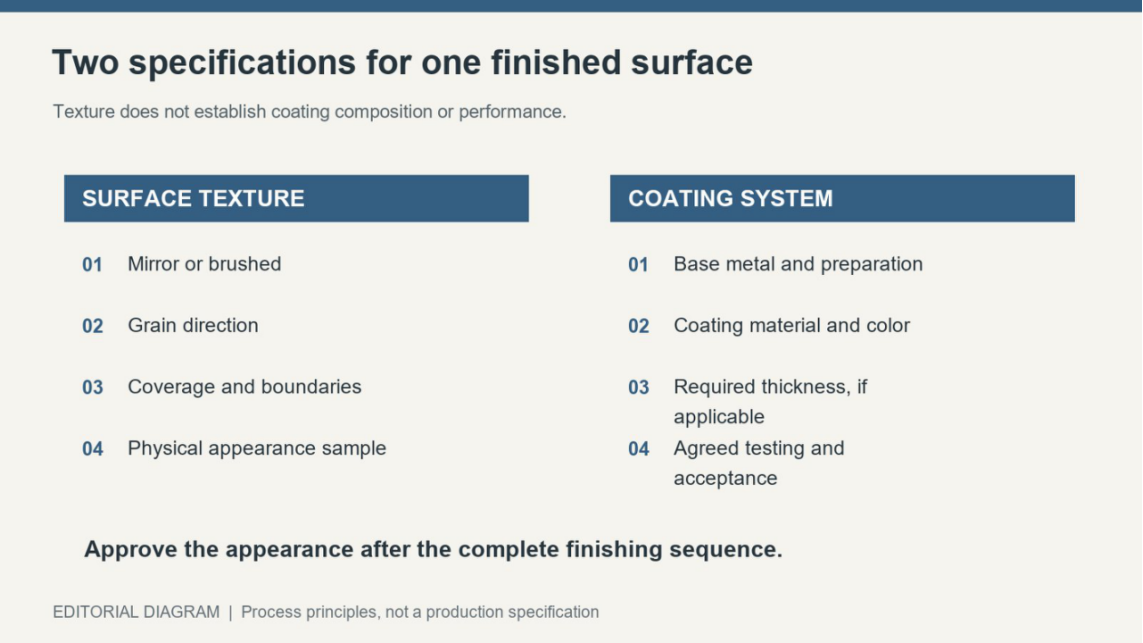
Surface texture describes the geometry of the finish; plating describes a deposited coating. A brushed appearance does not establish gold content, coating thickness or corrosion performance. Those requirements need to be written separately.
For coated jewelry, evaluate the appearance after the full coating sequence. A bare-metal reference is useful during development, but it cannot stand in for the finished color and reflection your customer will receive.
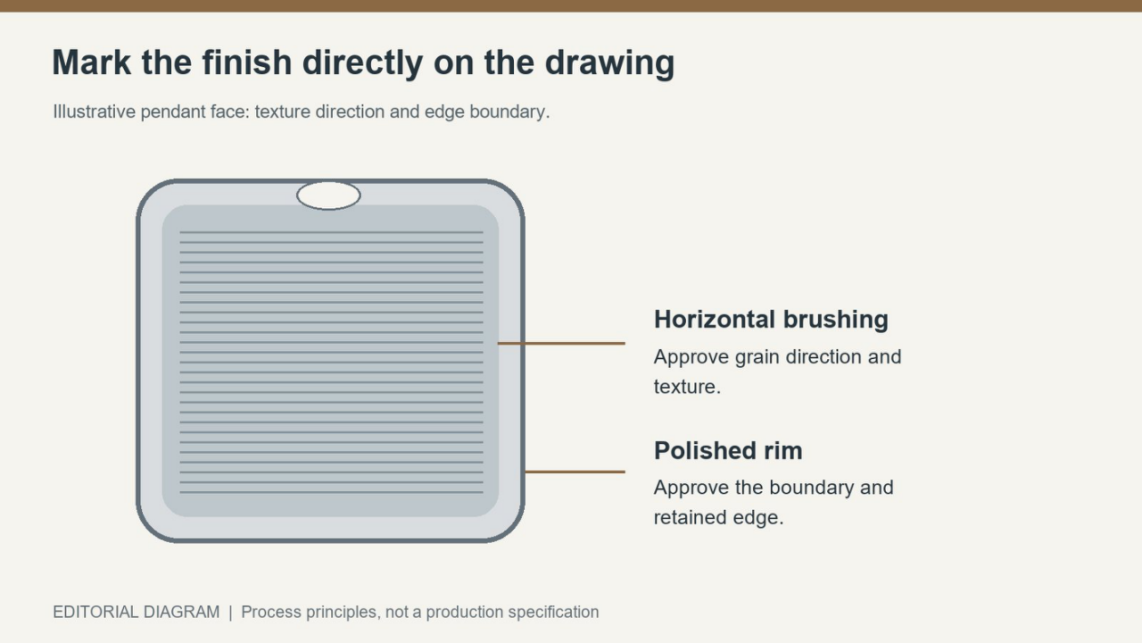
Consider this planning example: the pendant sample is approved with horizontal brushing, while the matching earrings arrive with vertical grain. Both are technically brushed, yet the collection looks inconsistent. Avoid that disagreement by marking the direction on the drawing and retaining the complete approved set.
The fix is small: define direction, coverage and boundaries before the factory prepares the production sample. Include every matching component rather than approving the pendant in isolation.
How should the factory inspect the order ?
Set viewing conditions with your supplier. A defined light source, viewing distance and sample orientation make visual comparisons more useful. Phone images can support communication, but should not become the only basis for a surface decision.
Use a short approval sheet covering:
· Finish on each visible face and contact surface.
· Brush direction, texture reference and polished boundary areas.
· Coating specification recorded separately from surface texture.
· Acceptable appearance and examples of rejectable marks.
· Packaging that prevents unnecessary rubbing between finished pieces.
For mixed finishes, inspect the border where they meet. Ask whether masking, tooling or additional handling is included in the quotation. A narrow polished edge around a brushed panel can require different work from finishing the whole piece the same way.
Also inspect assembled samples. Contact between links, clasps or stacked pieces can affect appearance. If wear testing is part of the brief, agree the contact location and assessment method instead of asking whether the finish has been tested in general.
Questions to settle before the next collection
Is brushed finishing cheaper than mirror polishing
Not automatically. Preparation, geometry, access and mixed-finish boundaries affect labor. Compare completed samples with the same material, coating and inspection requirements before making a cost judgment.
Can one piece combine both finishes
Yes, where its geometry and production sequence allow it. Mark each area on the drawing and approve the transition. Do not leave the boundary to a verbal description.
Can a later batch match the first one
It needs a retained reference and controlled instructions. Ask the supplier to check the new batch against the approved finish sample, including texture direction and the completed coating.
Choose one representative piece and request a mirror and brushed sample with otherwise matching specifications. If you discuss the project with JINYI Jewelry(www.jyjew.com), include a finish map and the components that must match. That makes the decision about your collection's actual appearance rather than two loosely defined finishing labels.