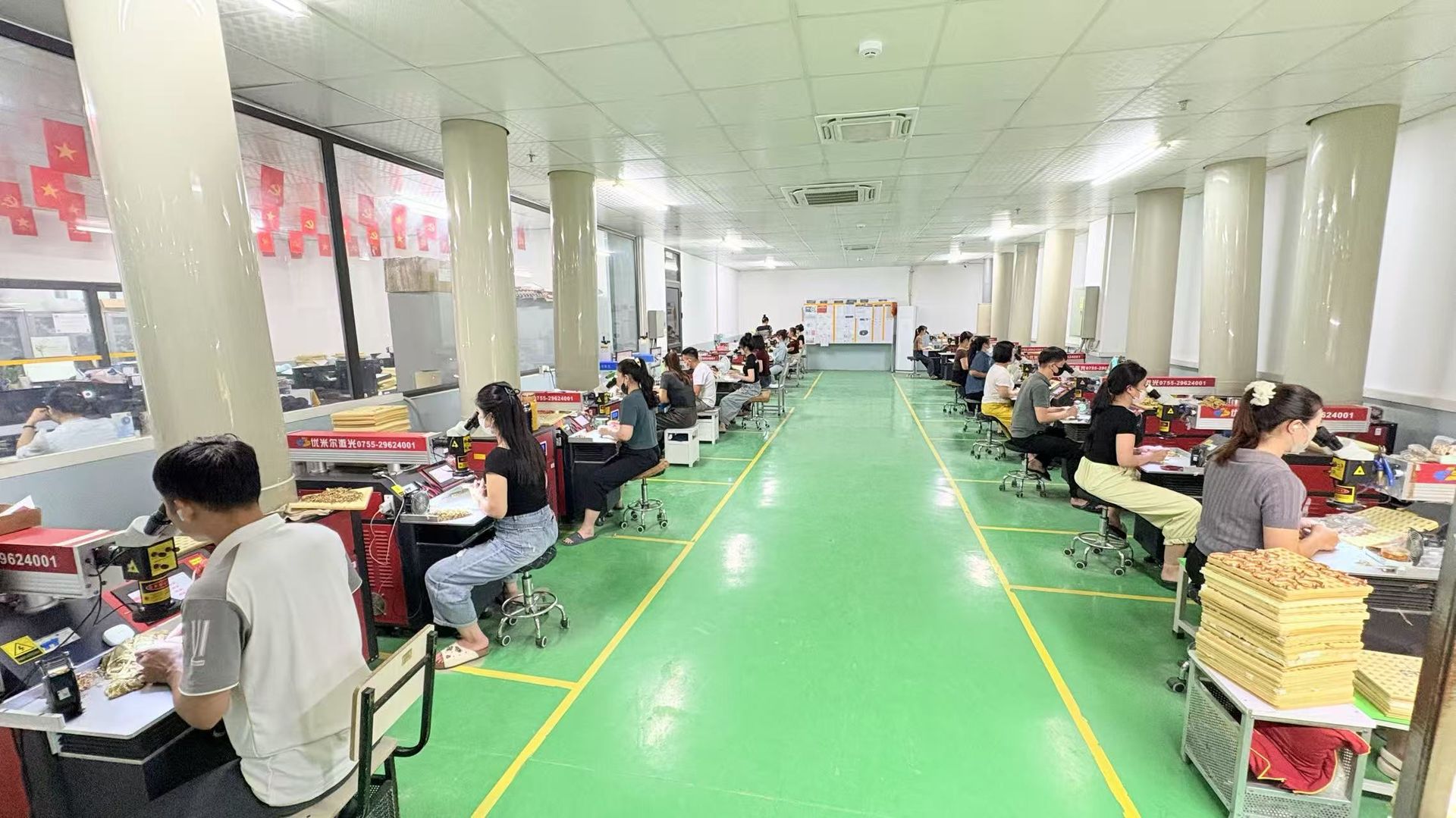
Gold-finish jewelry is often discussed with simplified labels: mechanical bond, chemical bond, gold filled, and gold plated. Those terms are not interchangeable. For a jewelry brand, the difference affects the material description, production route, cost, sampling method, and the claims you can responsibly make to customers.
The most important clarification comes first: Gold Filled is generally a bonded-material construction, not simply another name for electroplating. Chemical treatments may be used during cleaning, activation, or finishing, but an electroplated coating should be described as Gold Plated Jewelry rather than Gold Filled Jewelry. A supplier should confirm the construction and applicable market labeling before the product page is written.
What Is Gold Filled Jewelry?
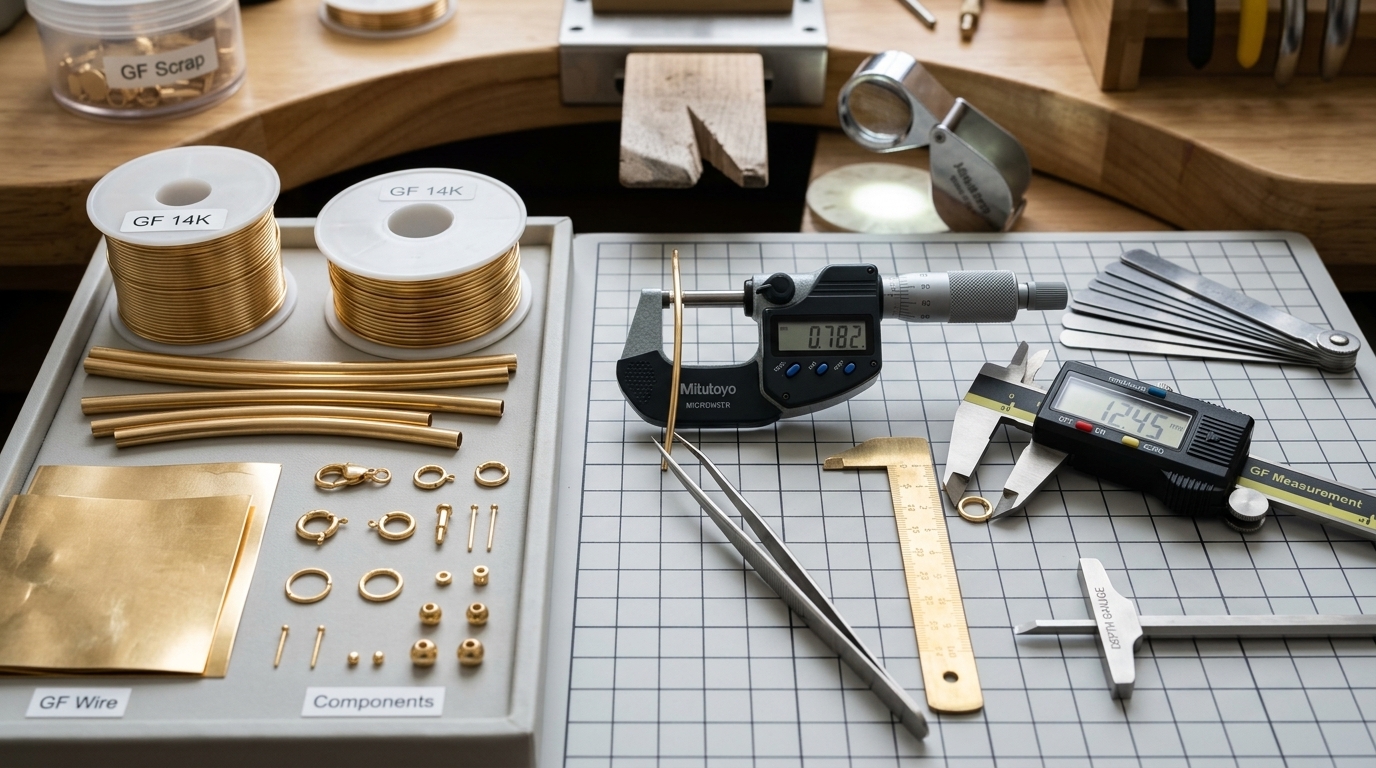
Gold filled material is made by bonding a layer of gold alloy to a base-metal core, commonly through heat and pressure, then forming the composite material into jewelry components. In the United States, the FTC Jewelry Guides address how gold-content claims such as “gold filled” should be represented; the exact marking and disclosure still depend on the product and market.
For procurement, do not stop at the phrase gold filled. Ask which gold alloy is used, what the core material is, how the bonded sheet or wire is formed, and how the final product is marked or documented. The performance of a finished piece also depends on thickness distribution, exposed edges, joining, forming, polishing, and intended use.
How Mechanical Bonding Works
Mechanical bonding joins the gold layer and core through controlled heat, pressure, and deformation. The process is more like building a composite metal than painting a surface. Once the bonded stock is made, it can be rolled, drawn, stamped, cut, or formed into jewelry components, subject to the material specification and design geometry.
A Typical Production Route
· Surface preparation: the gold alloy and core are cleaned and prepared for contact.
· Layer placement: the gold layer is positioned against the core according to the required construction.
· Heat and pressure: controlled conditions create the metallurgical bond.
· Annealing and rolling: the composite may be processed to achieve workable thickness and consistency.
· Forming and finishing: the bonded material becomes wire, sheet, findings, or finished jewelry components.
For buyers, the key question is not whether heat and pressure were used in theory. It is whether the supplier can control the bonded stock, forming route, joining method, and exposed areas in the actual design.
What People Often Call “Chemical Bonding”
In jewelry discussions, chemical bonding is sometimes used as a loose term for electrochemical gold deposition, adhesion promotion, or a plating system. These processes can create a gold-colored surface, but they do not automatically create Gold Filled material. Electroplating deposits a comparatively thin coating onto a prepared surface; it is normally sold and labeled as gold plated according to the applicable market rules.
That distinction matters because a plated finish and a bonded gold layer have different construction, cost, repair options, wear behavior, and disclosure requirements. If a supplier uses the phrase chemical bond, ask them to translate it into a specific process name: electroplating, PVD, immersion, adhesive coating, diffusion treatment, or another defined route. Vague terminology is a sourcing risk.
Mechanical Bond vs. Gold Plating: Quick Comparison
Area | Bonded gold material | Electroplated gold finish |
Construction | Gold alloy layer bonded to a core | Gold deposited on a prepared surface |
Common description | Gold Filled, when the legal criteria are met | Gold Plated Jewelry or another defined plating claim |
Design impact | Requires suitable sheet, wire, forming, and joining | Can follow complex surfaces but edges and wear zones need review |
Cost direction | Usually higher material and process cost | Often more accessible for fashion and larger style ranges |
Main buyer check | Bonded material, core, ratio, marking, forming | Base metal, surface preparation, plating specification, test plan |
Advantages and Limitations of Bonded Gold Material
A bonded gold construction can be attractive when a brand wants a more substantial gold-containing material than ordinary plating and the product geometry suits sheet, wire, or formed components. It may be appropriate for selected rings, chains, bangles, findings, and other designs that can protect the bonded layer through the manufacturing route.
· Potentially more material depth than a conventional plated surface.
· Useful for designs based on compatible sheet, wire, or tube stock.
· A clear material story when the construction and marking are properly documented.
· Higher material cost and more demanding forming or joining decisions.
· Not automatically suitable for every shape, edge, stone setting, or repair method.
Advantages and Limitations of Gold Plated Finishes
Electroplated finishes give manufacturers broad flexibility for color, base metal, and fashion-driven designs. Brass, sterling silver, stainless steel, zinc, and alloy products may use different preparation and plating routes. The result depends on the base metal, surface preparation, coating chemistry, thickness, protective topcoat, geometry, handling, and customer care.
· Flexible for many silhouettes, textures, and design categories.
· Can support lower price points and wider collection testing.
· Requires a defined plating specification rather than a color name alone.
· Wear performance varies by exposed edges, friction, skin chemistry, and care.
· “Waterproof” and “never fades” are not responsible blanket claims without evidence.
How Should a B2B Buyer Choose?
Choose bonded gold material when the material construction is central to the product story, the design can be made from suitable stock, and the target price supports the added material cost. Choose a plated finish when you need more design flexibility, a broader material range, or a fashion collection that depends on controlled color and accessible pricing.
Do not decide from the sample color alone. Request a technical comparison covering construction, base metal, gold content or plating specification, dimensions, joining, exposed areas, testing, marking, packaging, and intended market. Approve the wording only after the production route is confirmed.
Questions to Ask Your Jewelry Supplier
· Is the product truly Gold Filled, or is it Gold Plated Jewelry?
· What is the base metal and what gold alloy or plating chemistry is used?
· How is the gold layer applied, and which steps are performed by the supplier?
· How are edges, cut ends, soldered joints, and high-friction areas handled?
· What material ratio, thickness, test method, or marking applies to the target market?
· Can the approved construction be repeated for replenishment orders?
Alt tag: Jewelry quality control inspection with loupe, caliper, and finish references | Title tag: Gold finish jewelry sample inspection and production approval
Where JINYI Jewelry Fits into the Conversation
JINYI Jewelry (www.jyjew.com) has published product programs covering brass jewelry, 925 silver jewelry, stainless steel, zinc, alloy, and selected K-gold special orders. That range can be useful for brands comparing different gold-finish routes, but a requested Gold Filled construction should be reviewed as its own technical project rather than assumed from a general material list.
Because JINYI connects a Guangzhou headquarters with a manufacturing facility in Thanh Hoa, Vietnam, a buyer can also discuss whether development, sourcing, and production should follow one site or a coordinated China–Vietnam route. The correct choice depends on the material source, manufacturing method, quality records, destination market, and project feasibility.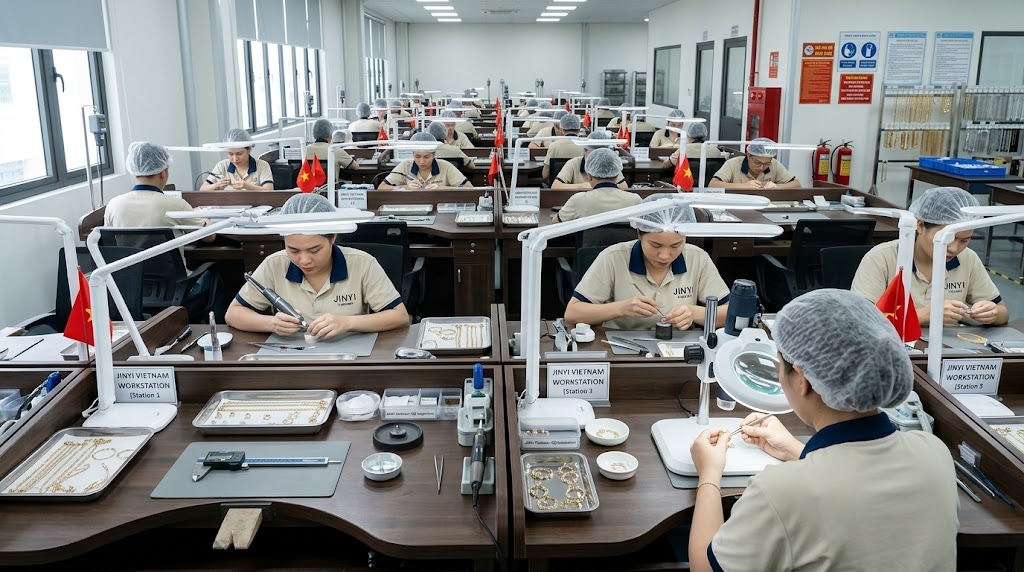
The same rule applies to compliance documents. JINYI’s reference library includes RJC, ISO, RCS, and audit materials, but each document must be checked for legal entity, scope, date, and validity. None of these documents alone proves that every requested Gold Filled design is available or compliant in every market.
Final Recommendation
Mechanical bonding and electroplating are not two interchangeable names for the same gold-finish process. Bonded gold material is a composite construction; plating is a deposited surface finish. Both can be useful for a jewelry brand, but the right choice depends on product geometry, material story, target price, wear expectations, testing, labeling, and customer positioning.
Before production, send your design files, dimensions, target material, gold color, order quantity, target price, testing requirements, packaging, destination market, and delivery schedule. Ask the supplier to state the manufacturing route in plain language and approve the sample against that route. For OEM, ODM, or custom jewelry projects, JINYI Jewelry (www.jyjew.com) can review the specification and confirm whether the requested construction is technically feasible.